Was the Stone that Sealed Jesus’ Tomb Round or Square?

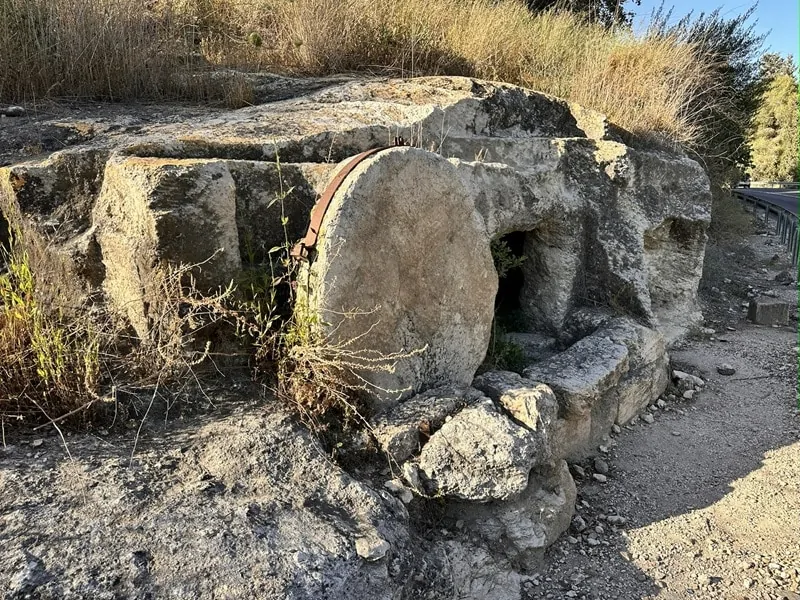
When most people picture the tomb of Jesus, they imagine a round stone rolled aside, a familiar image from countless artworks and Easter scenes. Yet archaeological evidence from first century Jerusalem suggests that this may not be accurate.
In 1999, the late Israeli archaeologist Prof. Amos Kloner published an important study on Second Temple period tombs around Jerusalem. He observed that while hundreds of rock-cut family tombs have been found from this era, almost all were sealed with square blocking stones, not round ones. The round rolling stones were extremely rare and appear to have been used only for the burial caves of the wealthy or high-status individuals.
Kloner proposed that the tomb of Jesus was most likely closed by a square stone, in line with typical Jewish burial customs of the time. This would mean that the Gospel descriptions of the stone being “rolled away” (Mark 16:4) may have referred to moving a large square stone aside from its socket, not necessarily rotating a circular stone along a groove.
The discussion continues to intrigue both archaeologists and theologians. Was the round stone image a later artistic interpretation, or was the tomb truly exceptional in its design? Either way, the removed stone that sealed Jesus’ tomb remains a symbol of the triumph over death, whether square or round.
The Square Stone at the Emmaus Tomb
A striking example of a typical first-century burial cave can still be seen near Emmaus Nicopolis, 18 miles west of Jerusalem. The tomb’s entrance remains clearly visible, and beside it lies the square stone that once corked its opening. Assuming Kloner is correct, this visual evidence provides a vivid impression of how the tomb of Jesus may have appeared after the Resurrection, with the blocking stone moved aside and the entrance standing open.
Visiting the First-Century Tomb at Emmaus
 The discussed tomb at Emmaus can be viewed during the opening hours of Emmaus Nicopolis, and it is about a hundred feet north of the Byzantine-Crusader church. It stands as a quiet yet powerful testimony to the burial customs of the first century, offering visitors a tangible connection to the world of the Gospels.
Bibliography
Kloner A. 1999. Did a Rolling Stone Close Jesus’ tomb? BAR 25/5:22-25