Herod’s Family Tomb
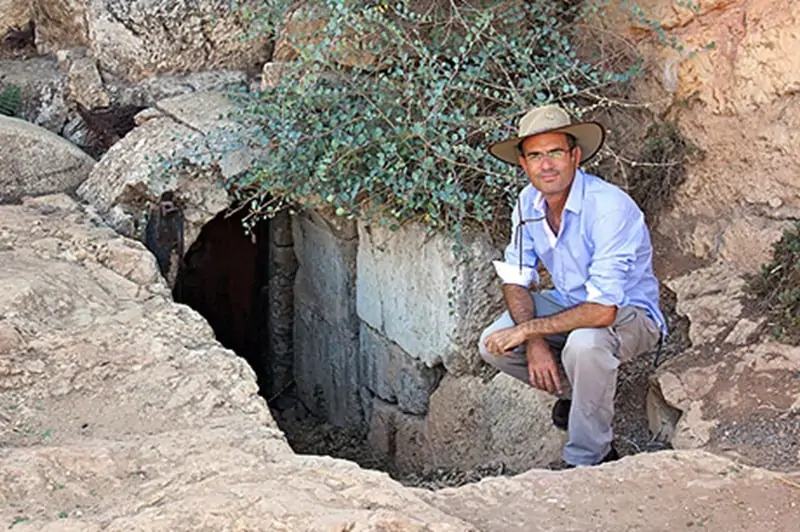
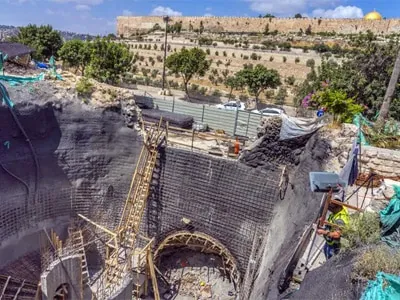
Just outside the walls of Jerusalem’s Old City, near the King David Hotel, lies an extraordinary ancient burial cave. The site is often called Herod’s Family Tomb or the Nicophoria Tomb. It dates to the late first century before the common era, reflects the splendor of Jerusalem during Herod’s reign, and relates to the tomb of Jesus.
The Architecture of a Royal Burial
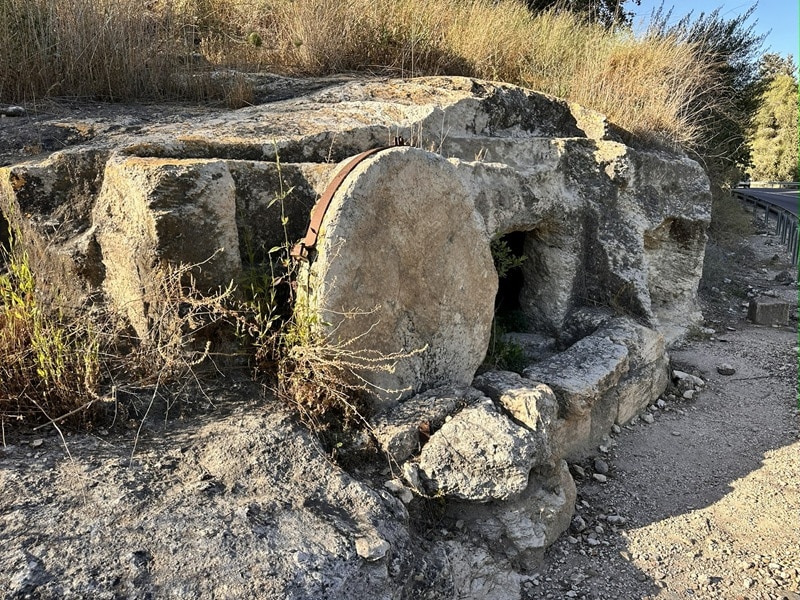
Discovered in 1892, the tomb was carved into the limestone ridge overlooking the Hinnom Valley. It includes a large forecourt and several burial chambers. The craftsmanship shows remarkable skill and precision typical of the Herodian period. The most striking feature is a huge circular stone once used to close the tomb’s entrance. Such round stones are extremely rare in Jewish tombs from that time. Most tombs were sealed with square blocking stones. The use of a rolling stone indicates a burial of very high status and great wealth.
Inside, archaeologists discovered a cruciform tomb plan with five burial chambers built of perfectly cut Herodian-style ashlars. Remarkably, two decorated sarcophagi were still found in situ. These remains, along with the construction technique, date the complex securely to the first century before the common era. The precision of the masonry and the richness of the finds show the tomb belonged to people of extraordinary standing.
Was It Really Herod’s Family Tomb?
No inscriptions were found to confirm the identity of those buried in the Tomb. Still, its location, style, and size suggest it belonged to an aristocratic family. Some scholars proposed it was used by members of Herod’s extended family. However, it is also possible that the tomb was built for a noble Jerusalem family influenced by Herodian architecture. Its proximity to the city’s elite quarter strengthens the link to powerful figures from the late first century before the common era.
The Debate About the Tomb of Jesus
The Round stone sealing Herod’s Family Tomb is often compared with the burial of Jesus as described in the Gospels. The texts mention a stone being rolled to seal and later to open the tomb. This detail has led many to imagine a similar circular stone. However, Archaeological evidence shows that most first-century Jewish tombs were closed with square stones fitted into a niche. Circular rolling stones were extremely rare and found only in tombs of the wealthy. IF Joseph of Arimathea’s tomb had a round stone, it was an exceptional and costly structure. Herod’s Family Tomb, therefore, provides a valuable example of what such a wealthy family’s tomb might have looked like. It gives an authentic sense of how a rolling stone could once have covered the entrance to the tomb of Jesus.
A tour of Herod’s Family Tomb can be combined with a Private Christian-Themed tour of Jerusalem.