Innovation without borders: Ten Israeli Inventions that changed the modern world
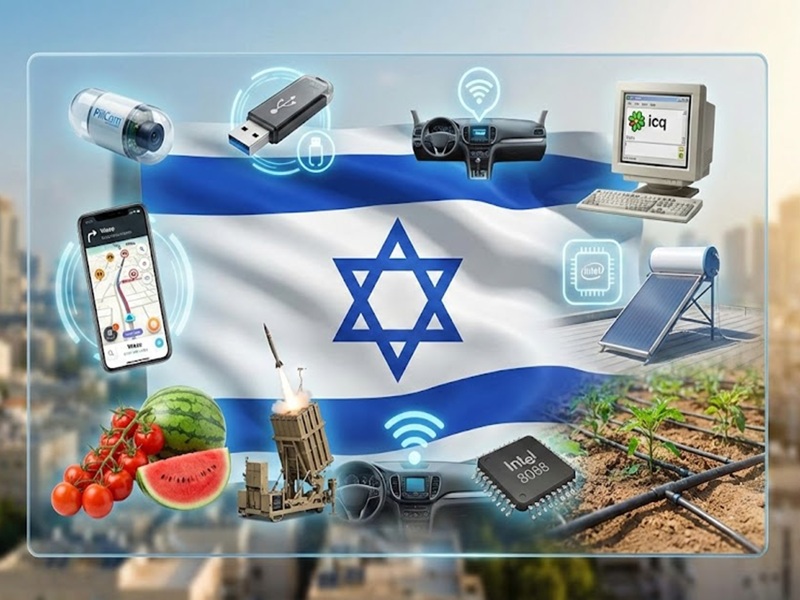 Israel is widely recognized as the “Start-up Nation” for good reason. Despite its small size and lack of natural resources, the country has consistently produced technology that fundamentally changed how the world eats, moves, and communicates.
Here are, in our opinion, the top 10 most influential Israeli inventions that have had a massive global impact.
1. Solar Water Heaters (דוד שמש)
 Due to a severe fuel shortage in the 1950s, Dr. Harry Zvi Tabor developed a more efficient solar collector that could absorb maximum heat from the sun. This led to the “Dud Shemesh,” the solar water heater found on almost every rooftop in Israel. This technology was decades ahead of the global “green energy” movement. Today, Israel has one of the highest per capita usages of solar water heating in the world. This sustainable model that has been exported to dozens of countries to reduce carbon footprints and electricity costs.
2. Drip Irrigation (Netafim)
 Before the 1960s, watering crops was often inefficient, leading to massive water waste through evaporation or runoff. Simcha Blass and his son Yeshayahu revolutionized this by developing a system of plastic pipes with “emitters” that release water directly to the plant’s roots in precise, slow amounts. This technology allowed agriculture to thrive in arid climates and desert environments where farming was previously impossible. Today, Netafim is a global leader, helping farmers across the world conserve water while significantly increasing crop yields to combat global food insecurity.
3. Commercial Cherry Tomatoes and Bio-Engineering
 While wild cherry tomatoes have been known since the 16th century, they were originally considered a garden novelty rather than a commercial crop. Israeli agricultural scientists, led by Professors Nahum Kedar and Haim Rabinowitch, engineered the modern commercial variety we see in supermarkets today. They focused on creating a tomato with a long shelf life, high sweetness, and a uniform ripening process suitable for global shipping. This spirit of innovation extends to other produce as well, such as the development of seedless watermelons and the “Or” mandarin orange. Israeli scientists also successfully developed the prickly pear (sabra) with no thorns, making the popular fruit much easier to harvest and consume.
4. ICQ (The First Instant Messenger)
 Before WhatsApp, Facebook Messenger, or Slack, there was ICQ. Developed by four young Israelis at Mirabilis in 1996, it was the first global peer-to-peer instant messaging service for the internet. It introduced the concept of a “buddy list” and real-time status updates (Online, Away, Busy). This software sets the architectural and social blueprint for how we communicate online today, proving that the internet could be used for immediate, personal connections rather than just browsing static pages.
5. The USB Flash Drive (DiskOnKey)
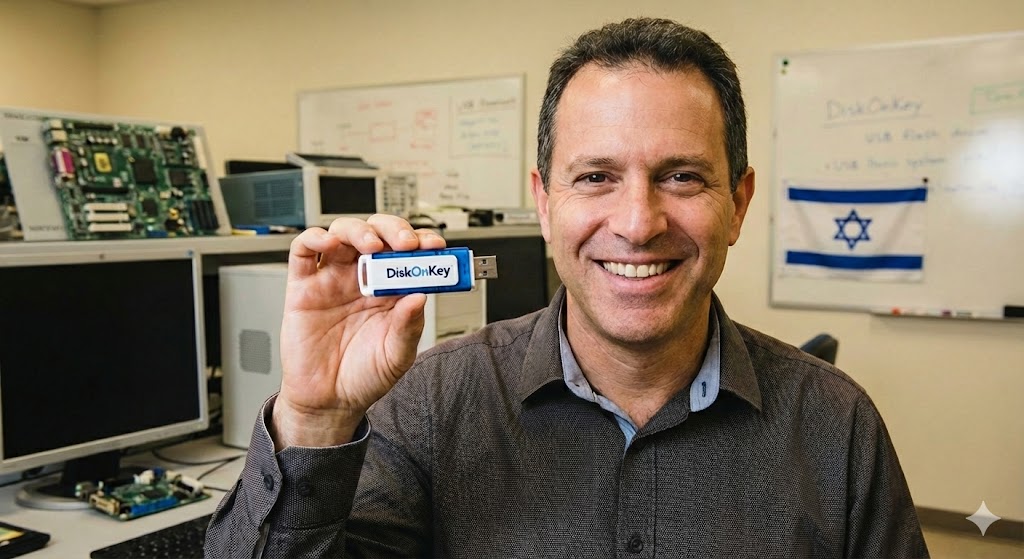 It is difficult to remember life before we could carry gigabytes of data in our pockets. Dov Moran and his company, M Systems, invented the “DiskOnKey” in 1999. Before this, data transfer relied on fragile floppy disks or slow CDs. The USB flash drive provided a durable, portable, and plug-and-play solution for storage. This invention eventually became the global standard, making physical data transport seamless across every industry from education to high-tech defense.
6. Waze and GPS Mobile Navigation
 Waze was the first platform to use crowdsourced data to navigate traffic in real time. Originally called Freemap Israel, it turned every driver into a data point to provide a living view of the world’s roads. However, the impact goes even deeper: the very concept of GPS navigation on cellphones was also pioneered in Israel. By integrating satellite signals with mobile software, Israeli engineers changed how humans perceive geography. Google eventually acquired Waze in 2013 for over 1 billion dollars, and its logic now powers the navigation of hundreds of millions of people daily.
7. PillCam (Given Imaging)
 Medical diagnostics were transformed by the invention of the PillCam, a disposable, miniature camera contained in a swallowable capsule. Developed by Given Imaging, this device allows doctors to see inside the small intestine and other parts of the digestive tract that are difficult to reach with traditional endoscopes. It transmits high-speed photos as it passes naturally through the body, making GI diagnostics non-invasive, painless, and much more accessible for patients worldwide who wish to avoid uncomfortable hospital procedures.
8. Intel’s Global Processors (8088 and Centrino)
 While Intel is an American corporation, some of its most pivotal technological breakthroughs were designed and engineered in its Haifa and Jerusalem R&D centers. The 8088 processor, which powered the very first IBM PC and sparked the personal computer revolution, was designed in Israel. Later, in 2003, Israeli teams developed the Centrino chip, which enabled laptops to have high performance Wi Fi connectivity without draining the battery rapidly. These inventions were instrumental in making the modern, mobile digital age possible.
9. Mobileye
 If your car warns you when you are drifting out of your lane or about to hit a pedestrian, you likely have Mobileye to thank. Founded by Amnon Shashua and Ziv Aviram, this vision-based system uses sophisticated algorithms to “see” the road and interpret hazards in real time. It is now integrated into millions of vehicles from nearly every major car manufacturer. Mobileye’s technology is a foundational pillar for the future of autonomous driving, aiming to eliminate human error and save millions of lives on the road.
10. Iron Dome and Advanced Defense Systems
 Developed by Rafael Advanced Defense Systems, the Iron Dome is the world’s most successful short-range missile defense system. It uses advanced radar and heat-seeking technology to intercept incoming projectiles with a success rate exceeding 90 percent. Beyond this, Israel has developed other critical military features like “Trophy,” an active protection system for tanks that intercepts anti-tank missiles before they hit. Furthermore, Israel is a global leader in cyber capabilities, producing many of the encryption and network security protocols used by governments and private corporations to defend against digital warfare.
Necessity, Creativity, and “Chuzpah”
The common thread through all these inventions is a unique cultural cocktail of necessity, creativity, and a healthy dose of “Chuzpah.” In Israel, necessity has always been the mother of invention: a country with no water had to invent drip irrigation; a country under constant threat had to develop the Iron Dome; and a country with no natural resources had to rely on its only limitless asset—human capital. This creativity stems from a refusal to accept the status quo. Whether it is shrinking a camera into a pill or redesigning how a processor handles data, Israeli innovators look at “impossible” problems as puzzles waiting for a solution. Underpinning it all is “Chuzpah חוצפה”, that is the audacity to challenge experts, cross traditional boundaries, and believe that a small team in a tiny country can change the way billions of people live.
By turning scarcity into a strategic advantage, Israeli innovation has left an indelible mark on global health, safety, and convenience, continuing to shape the world well into the 21st century.