Petrus in Gallicantu Church, Jerusalem

The Church of Saint Peter in Gallicantu (Latin for Peter of the Cock crow) is a striking landmark on the eastern slope of Mount Zion. According to Catholic tradition, this is the site where Jesus was interrogated by the High Priest, imprisoned before his trial, and where Peter denied him three times (fulfilling the words recorded in Mark 14:30). The present church, built between 1924 and 1931, rises above the ruins of earlier sanctuaries and the remains of an elaborate estate from the first century. Archaeological discoveries beneath the complex have prompted scholars to suggest that this mansion may have belonged to the High Priest himself, though the identification remains unproven.
Finds from the 1st Century
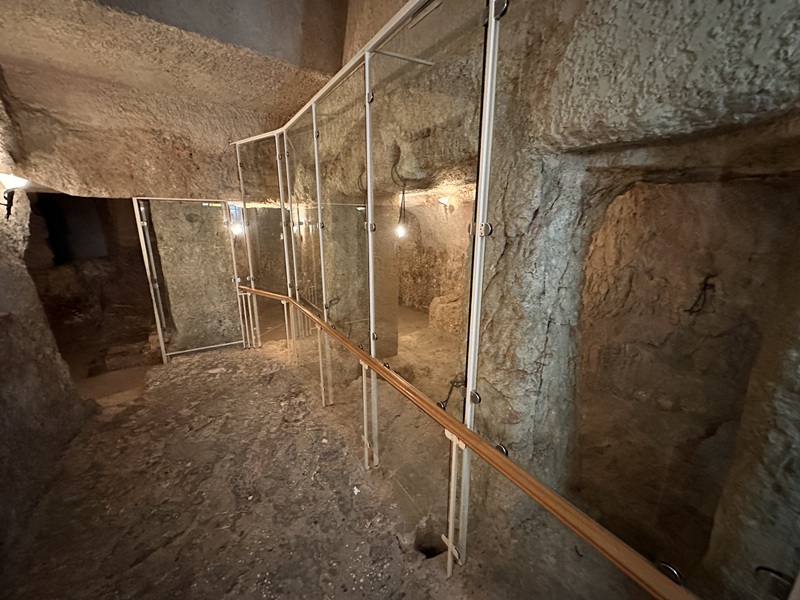 Among the most significant finds are several ritual baths, or mikvaot. Their unusual number indicates that priests likely resided here, since they required frequent ritual purification before performing sacred duties. Another discovery includes large underground halls that may have served as stables. If indeed used in this way, they reflect considerable wealth, a characteristic often associated with priestly families.
The Prison of Jesus?
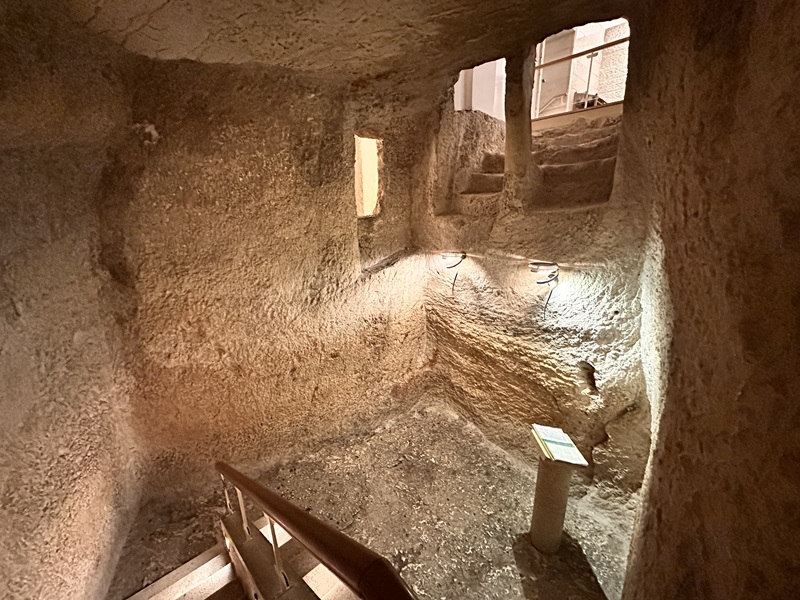 A particularly striking feature is a deep cistern carved into the rock. On its shaft, three crosses were engraved, suggesting that as early as the Byzantine Period this space was identified and sanctified as the place where Jesus was held following his interrogation. Tradition holds that from here he was taken to Pontius Pilate for trial. Together, these findings combine archaeology, tradition, and faith. The church today not only commemorates Peter’s denial and repentance but also invites visitors to reflect on the events that shaped Christian belief at the heart of Jerusalem.
Architecture and Artistic Decoration of the Modern Church
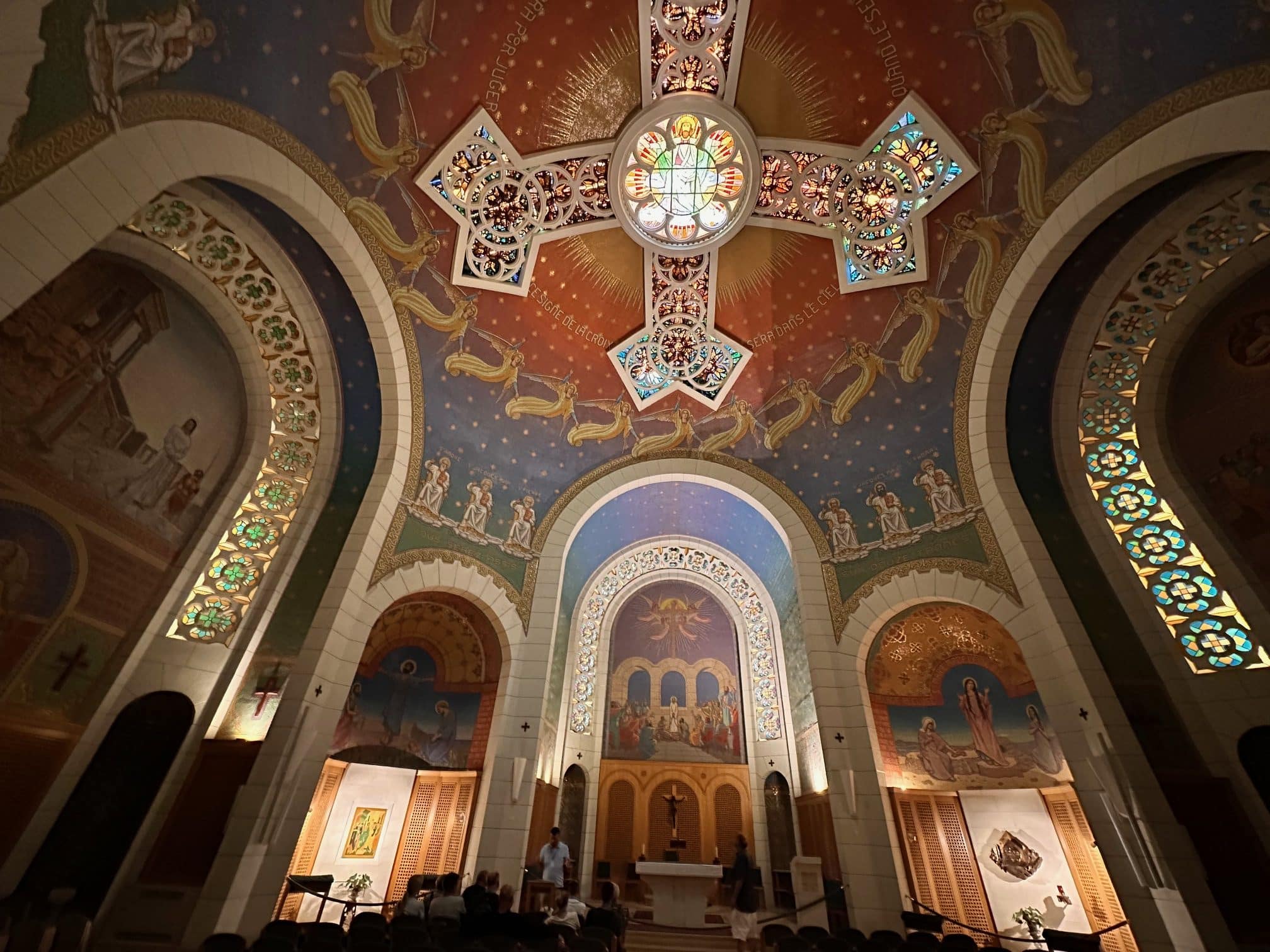 The modern church was designed with multiple levels, each highlighting different stages of the Passion narrative. Inside, brilliant mosaics portray scenes such as Peter’s denial, the interrogation of Jesus, and his humiliation before the guards. These colorful works of art, combined with sweeping stained-glass windows, create a solemn and contemplative atmosphere. The church’s exterior is equally distinctive, crowned with a golden rooster perched on its dome, symbolizing Peter’s fateful moment of weakness.
The Byzantine-Era Model of Jerusalem
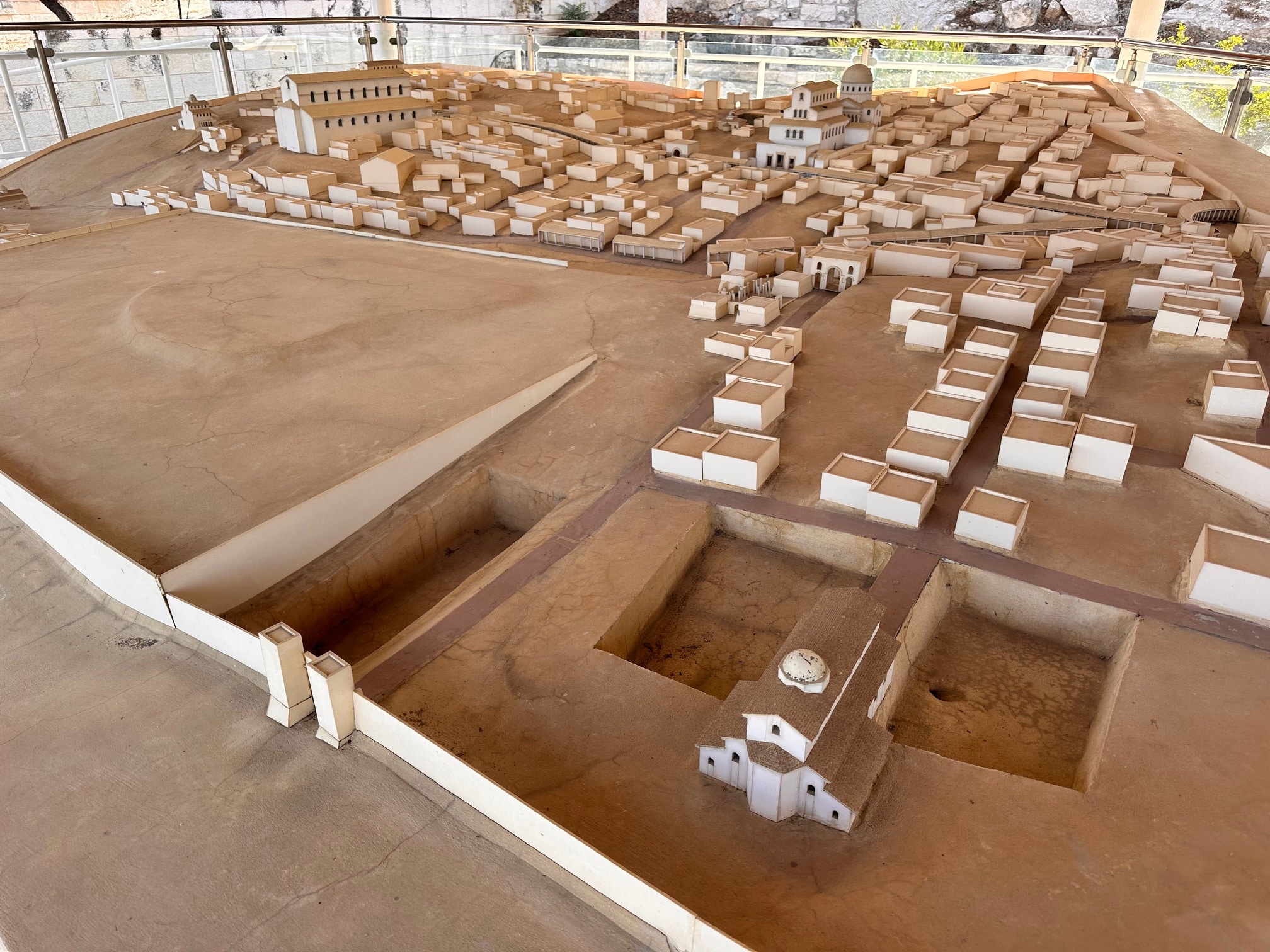 At the courtyard of the Church of Saint Peter in Gallicantu, visitors can also encounter a remarkable Byzantine model of the city, created in 2003. The model presents Jerusalem as it appeared during the Byzantine period, highlighting its walls, gates, streets, and grand churches. The model allows pilgrims to imagine the city when Christianity was flourishing, centuries after the time of Jesus and the Apostles. Its careful design helps visitors visualize the transformation of Jerusalem into a Christian center of pilgrimage, worship, and devotion from the 4th century CE and up to the Muslim conquest in 638 CE.
Touring the Church of Petrus in Gallicantu
The Church can be accessed by foot or by car from Mount Zion. It is open every Monday to Saturday, from 8:30 to 17:00.
A tour of Petrus in Gallicantu church can be combined with a guided day tour of Jerusalem.