The Knesset’s Archaeological Garden
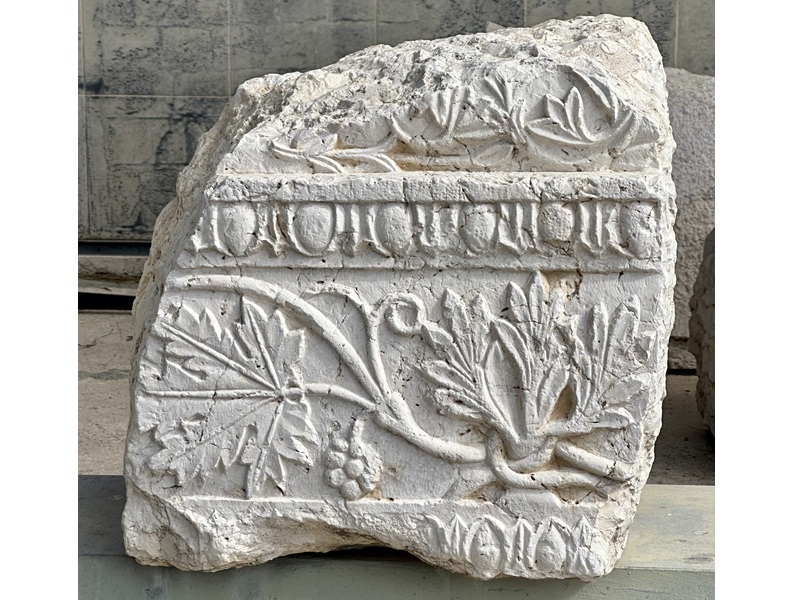
Although the Israeli Parliament building (“Knesset”) is more associated with current events and Israeli politics, it has a little-known and rarely-visited archaeological garden at its NW corner.
Opened in 2009, the archaeological garden was made possible by a generous donation of Saul A. Fox and his family. Titled “Peace be within thy Gardens” (Psalms 122), the exhibit showcases architectural finds from Jerusalem and its vicinity that span from the 1st century CE to the time of the Crusaders. The greenery in the Archeological Garden is also thoughtfully designed with plants that are typical of Eretz Israel in earlier times.
The main highlights of each Display are:
The Muslim Periods and Crusader Times
 A replica of an Ottoman-era Sabil (public drinking fountain) is augmented with architectural fragments from the Crusaders period, including a distinct elbow capital, and a column capital with vegetal patterns and an ox image. The Early Muslim Period is represented by architectural fragments from the Temple Mount and its vicinity. The exhibit also presents a detailed map proposal, suggesting what Jerusalem looked like between the 7th and the 16th century CE.
The Byzantine Period
The rich display of finds from the Byzantine period includes some important mosaic floors and rare inscriptions:
 The Mamilla Mosaic: Discovered in the 1990s during salvage excavations for the development of Mamilla pedestrian mall, the mosaic was originally set in a niche in front of a burial cave filled with dozens of skeletons. This burial cave was associated with the Persian invasion of Jerusalem and the slaughter of its Christian population in 614 AD. The inscription reads in Greek:
+ ΥΠΕΡ ΣΩΤΗΡΙΑΣ / Κ(ΑΙ)ΑΝΤΙΛΗΜΨΕΩΣ ΩΝ Κ(ΡΙΟΥ)Σ ΓΙΝΩΣΚΕΙ ΤΑ Ο / ΝΑΜΑΤΑ ΑΥΤΟΝ +
“For the Redemption and Salvation of those whose name the Lord knows”.
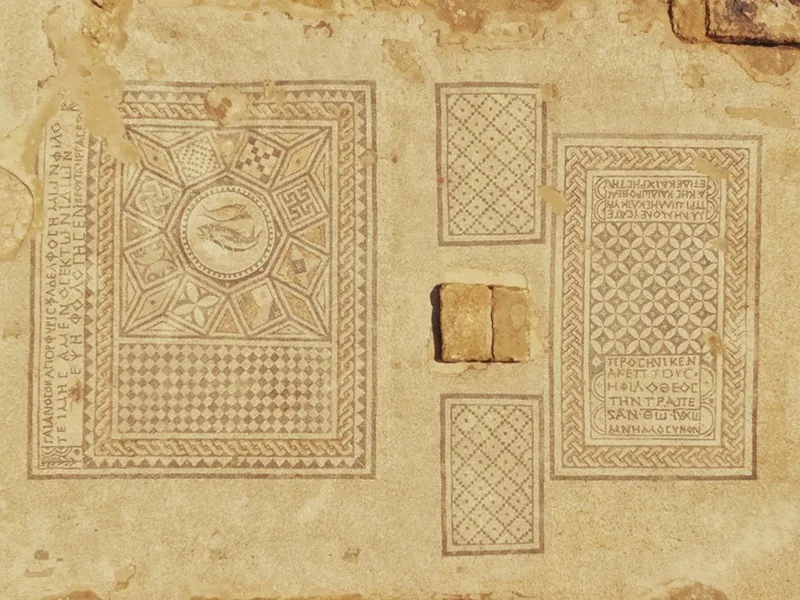
 The Mount Scopus Mosaic: Uncovered in the 1990s on the eastern Slope of Mount Scopus, this mosaic floor was part of a monastery that served Christian pilgrims who traveled from Jerusalem to the baptism site near Jericho. Its Greek inscription commemorates the monastery’s clergy during whose lifetime the the work was executed:
ΕΠΙ Θ / ΟΩΔΟΡΟΥ / ΠΡΕΣΒΥΤΕ / ΡΟΥ Κ(ΑΙ) ΗΓΟΥΜΕ / ΝΟΥ ΚΥΡΙΑΚ(ΟΥ) ΜΟ / ΝΑΧΟΥ ΕΓΕ / ΝΕΤ(ΟΥ) Τ(ΟΥ) ΠΑΝ / ΕΡΓΟΝ
“Under Theodorus the priest and Abbot and Kyriakos the monk all of this work was completed”.
 Georgian Inscription: Found in a crypt of a monastery at today’s Umm Leisun, 4 miles south of Jerusalem’s Old City. It reads:
“This is the grave of Iohane Bishop of Purtavi, Kart’veli”.
The Inscription was dedicated to an unknown priest of Iberia or Gregorian origin. The Name “Kart’veli” is the earliest reference to Georgia ever found in archaeological sites. It dates to the turn of the 6th century CE.
The exhibit also includes a Mosaic floor of a monastery found in the Kidron valley, depicting a gazelle and an octopus, and a mosaic floor of an Armenian monastery found north of Damascus Gate.
The Late Roman Period
The late Roman period is represented by two artifacts: a colorful mosaic floor of a Roman villa founded 3 miles SW of Jerusalem, and a monumental Latin Inscription. The Inscription documents a dedication of a public building in the city in the days of Emperor Caracalla. It reads:
 ADIAB · PARTH
CAES · M · AVR ·
[PL]VTILLAE · AVG /
[AEL]IA KAP[ITOLINA] COMMO[DIANA]
[—] SVMPTV
PR · CVRANTE
Translation
(To/For) Adiabenicus, Parthicus [=Titles of Emperor Septimius Severus]
(and) Caesar Marcus Aurelius [=Caracalla]
(and) Plautilla Augusta [=Caracalla’s wife]
Aelia Capitolina Commodiana [=The Roman name for Jerusalem]
At the expense of [Name Erased]
Under the supervision of [Name Erased/Missing]
The inscription dates to 202-205 CE, when Plautilla was Caracalla’s wife. It also bears Jerusalem’s honorific title “Cmmodiana” which was added by Emperor Commodus (180-192 CE).
The Herodian Period
 For many, the most evocative items are the architectural fragments from the Herodian period. These massive, finely carved stones were excavated from the foot of the Western and Southern walls of the Temple Mount. Originally part of the colossal retaining walls and the grand plaza built by Herod the Great, these stones were the very fabric of the Second Temple’s grandeur. Most striking are the highly ornamented fragments that once decorated the Huldah Gates. These are the very stones that were viewed and admired by the multitudes of pilgrims ascending into the temple courtyards, including Jesus of Nazareth.
Some Final Thoughts
The proximity of these ancient fragments to the seat of modern Israeli law provides a humbling perspective on the continuity of life in Jerusalem. As lawmakers debate the future within the walls of the Knesset, the silent sentinels in the adjacent garden remind every visitor that the challenges of today are part of a long history of the region.
A tour of the Knesset can be combined with a day tour of Jerusalem.